
What's Stuck
Collected Is Not Reconciled: Why a Healthy Bank Balance Hides the Leak

Collected Is Not Reconciled: Why a Healthy Bank Balance Hides the Leak
A payment arriving in your bank account does not prove your books explain it correctly. Tie each deposit to its customer and job, then reconcile the records monthly. Until those connections are reliable, job margins, partner payouts, and forecasts can mislead you. Money a customer owes you is not cash you can spend today.
Key takeaways
- A collected payment still needs a customer, job, and verified record.
- Check unmatched deposits, duplicates, categories, and receivables separately.
- Use AI categorization as a draft that someone reviews.
- Assign a monthly reconciliation owner before year-end pressure builds.
A pattern we see in service businesses is simple money-in, money-out tracking lasting until growth makes job costing unavoidable. More work creates more deposits, purchases, and handoffs to keep straight. At that point, a real accounting platform becomes part of the operating discussion, because the owner needs records that connect the activity.
In the books we reviewed, payment records contained gaps and duplicates that made collection status hard to trust. A bank-feed connection quietly created a duplicate account, while auto-categorization mislabeled supplier purchases and a returned payment still looked complete. None of these showed up in the bank balance. Every one showed up in the owner's decisions.
We also saw forecast jobs being treated as cash before that cash existed, so the forecast looked stronger than it was. One retail owner fixed a version of this by splitting two jobs one person had been doing: ringing up the sale, and booking it. Different owners, different checks.
A deposit proves arrival. The records must explain its meaning.
THE PATTERN
What does a bank balance leave unexplained?
A bank balance tells you what is in that account, while a matched record explains which business activity produced it. You need both views to make spending and payout decisions. A deposit without a reliable customer and job connection leaves the owner guessing about what has actually been paid.
Payment collection answers a narrow question: did money arrive through this route? Your records must also explain who paid, what they paid for, and whether that payment remains valid. A collected payment might cover several jobs or only part of an invoice. Preserve the supporting detail; never force the deposit into whichever open record looks convenient.
Vista's Real-Constraint Lens helps identify the issue beneath the visible cash concern. Apply it here and the constraint is usually not sales. It is that nobody can say which payment belongs to which job. Asking the team to sell more adds activity to records they already struggle to explain, so the uncertainty grows alongside revenue.
Collected versus reconciled. Collected means the payment arrived. Reconciled means someone compared the relevant records, resolved differences, and confirmed what the payment belongs to.
This matters for decisions that depend on the job record, including margin reviews and proposed partner payouts. An owner might see cash in the bank while a job still has unpaid work or a wrongly assigned purchase. Do not settle a partner payout from a job margin until the payments and costs on that job are matched. Cash in the bank is not a margin.
Start from the symptom, not the assumed cause. More than one gap can exist in the same set of books. A duplicate entry can also carry the wrong category, so closing one issue should not imply that the whole record is sound.
| Symptom | Likely leak | The check |
|---|---|---|
| Money arrived, but a job still looks unpaid | Deposit lacks a customer or job match | Trace the deposit to payment detail and the job records |
| The same activity appears more than once | Duplicate entry or feed account error | Compare source records and account setup before changing entries |
| A job margin looks implausible | Supplier purchase has the wrong category or job | Review the source document and have your bookkeeper confirm treatment |
| The forecast looks healthy, but spending is tight | Expected jobs or receivables are treated as available cash | Separate current cash from money still expected or owed |
THE FOUR GAPS
Where do the records usually break?
Check matching, duplicates, categorization, and cash timing as separate problems, because each can distort the same headline number. A healthy-looking total can conceal failures underneath it. Fixing the visible balance alone will leave you unable to explain which jobs and obligations the business can actually rely on.
Can you trace every deposit to the work it paid for?
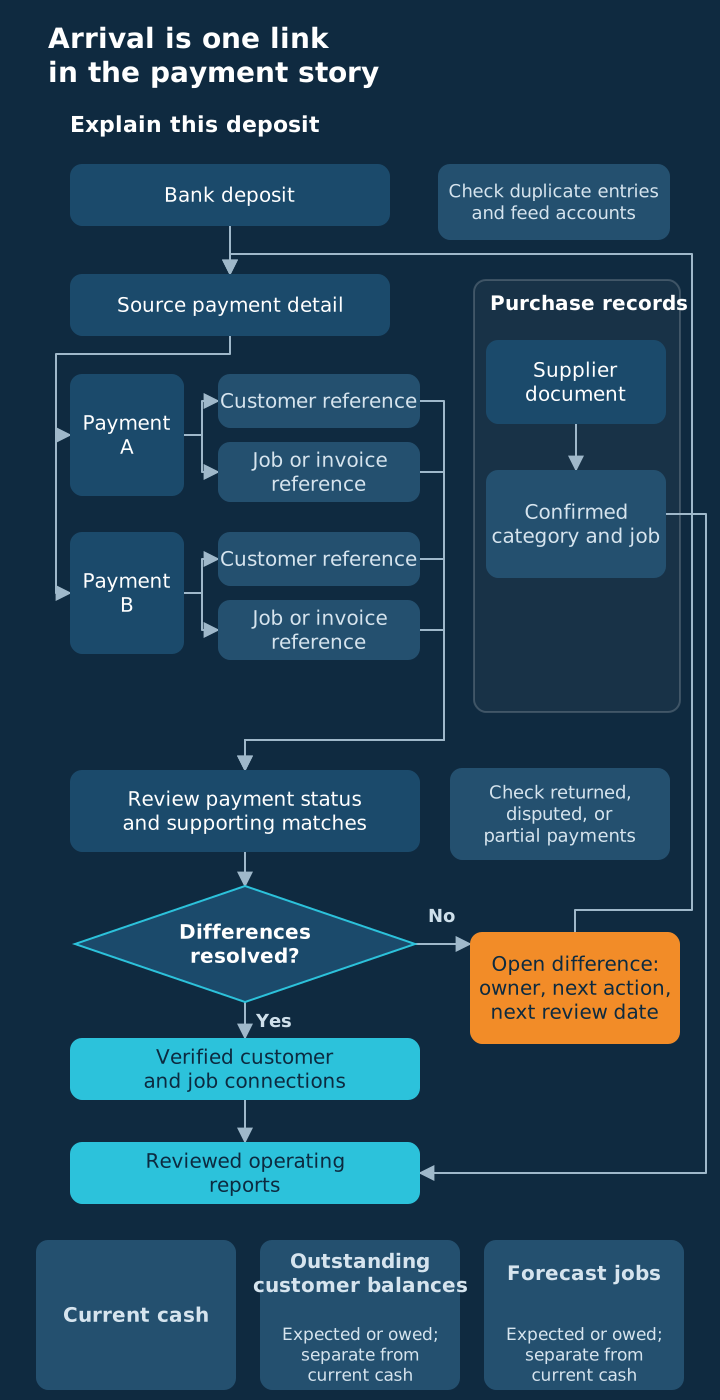
Unmatched deposits leave the payment story incomplete, even when the money is visible in the bank account. Start with the source payment detail and connect it to the customer and relevant job records. If a deposit combines several payments, retain the breakdown so someone can follow how the total was assembled.
Here is how it goes wrong. A customer pays two invoices in one transfer. The bank shows one deposit. Someone applies all of it to the first job because the amount looked close. Now one job's margin looks excellent and the other looks like a collections problem, and neither is true.
Do not assign a payment simply because its amount resembles an open invoice, since different transactions can look alike. Check the identifiers and payment detail, and leave ambiguous matches for your bookkeeper to resolve. The team also needs a consistent way to record partial payments and payments covering more than one job.
Are duplicates making the activity look stronger than it is?
Duplicates can make the records contradict the actual activity, so inspect source records and feed setup before correcting anything. In one set of books we reviewed, the bank feed had created a second copy of an existing account. The same transactions could land in two places. Nobody was watching the copy.
Bring the account map and the source statement to your bookkeeper, then confirm which record represents the actual account. Avoid deleting suspicious entries merely to make a total agree, because related records may depend on them. Your bookkeeper can investigate the correction while preserving a clear trail of what changed.
When tracing either problem, keep these records together:
- The original payment or bank record.
- The linked customer and job references.
- The unresolved difference and the person assigned to investigate it.
Does the category describe the actual purchase?
A category should reflect the underlying transaction, with treatment confirmed by your bookkeeper. Supplier names alone do not explain every purchase from that supplier. In the records we reviewed, auto-categorization mislabeled purchases, leaving the owner with an apparently organized view that required closer inspection of the source documents.
Use the purchase detail to check what happened, and resolve any uncertainty with your bookkeeper. Ask separately whether the purchase has the right job connection for your management reporting. A tidy category list and accurate job costs are related goals, but one does not automatically establish the other.
Are you treating money owed as money available?
Keep current cash separate from customer balances and forecast jobs, so the cash view shows when money is still expected. An accepted job can create work without creating cash today. A customer balance records an amount owed, while the payment record should show whether that amount has actually arrived and remains valid.
A returned payment makes this distinction especially important, because a completed status can survive after the payment fails. Check the payment's current status against its source record before relying on it. Keep disputed and uncertain items visible, and use a separate forecast to describe expectations. Do not blend expected money into available cash.
Tidy categories are not accurate job costs.
THE AUTOMATION LIMIT
What can AI and auto-categorization safely contribute?
Let AI draft the match. Never let it close the month. A suggestion stays a draft until someone checks it against the source record. It becomes useful when the reviewer can inspect that record and recognize where the system does not know enough.
AI can help describe unresolved items, group repeated issues, or propose questions for the person who owns the record. Give it the approved context it needs and limit access to the information relevant to that task. Attach the source reference so the reviewer can check every suggested match before accepting it.
Keep the division of work explicit:
- Automation prepares possible matches, summaries, or categories for review.
- The reviewer checks source records and resolves the business context.
- Your bookkeeper handles accounting treatment where that judgment matters.
Watch for rubber-stamping. A reviewer who approves familiar-looking suggestions all month is no longer reviewing. Sample approved records alongside the exceptions to see whether the same error keeps passing through. When an error recurs, change the rule or input that created it before clearing the next queue.
Our guide to gating AI output by confidence provides a way to think about when uncertain output should reach a human. Confidence alone cannot replace documentary support for a payment match. Keep unsupported items unresolved, even if the wording sounds convincing and the suggested category appears consistent with earlier entries.
Make approval easy to inspect later by retaining the source, proposed change, reviewer, and reason for the final decision. That record helps the next person understand the correction without rebuilding the investigation from memory. It also keeps the team from treating a successful automation run as evidence that the books themselves are complete.
THE MONTHLY ROUTINE
What should the monthly reconciliation check include?
Assign a recurring owner to compare the records, resolve differences, and explain what is still open before the month is treated as ready for decisions. A checklist gives the work a repeatable shape. Your bookkeeper should adapt the details to your business and accounting needs.
Set the review date and have the statements in hand before it. A month rebuilt in a rushed meeting is how errors get waved through. Define who supplies missing payment detail, who resolves job references, and who approves corrections. Ownership should follow the work across the payment tool, operational record, and books, with an owner at every handoff.
Use this monthly checklist with your bookkeeper:
- Gather statements, payment details, invoices, purchase records, and relevant job references.
- Confirm that account and feed setup reflects the actual accounts being reviewed.
- Compare each deposit with the supporting payment detail and customer records.
- Resolve duplicate records and unexplained differences through your bookkeeper.
- Review categories and job assignments against the underlying purchase information.
- Check returned, disputed, and partial payments before relying on completed status.
- Separate current cash, outstanding customer balances, and forecast jobs in the operating view.
- Record unresolved items, owners, next actions, and the date of the next review.
Nothing leaves the open list without a written reason. The owner needs to know whether the uncertainty affects a job margin, a payment decision, or the cash view. Your bookkeeper should decide how the records are handled while the missing evidence is being collected.
| Record to retain | What it lets the next reviewer understand |
|---|---|
| Source document or payment reference | What supports the match or proposed correction |
| Customer and job connection | Which work the payment or purchase belongs to |
| Difference and review decision | Why the record changed or stays unresolved |
| Owner and next review date | Who is responsible for closing the remaining gap |
Finish by reviewing the reports that depend on the corrected records, so an old error does not survive in a copied forecast. Our explanation of why dashboards are the final form follows the same principle: the display depends on the records underneath it. A dashboard cannot independently repair a missing payment match or a wrongly assigned cost.
THE RIGHT HELP
When should you bring in a bookkeeper?
Bring in a bookkeeper when unresolved records repeatedly prevent the owner from explaining cash, job costs, or payment status. The need becomes especially clear when recurring feed and matching errors keep returning. Ask a qualified accounting professional for decisions involving accounting treatment, tax matters, or the interpretation of your financial statements.
Do not wait for a backlog. If the same unexplained difference survives a month-end review, stop fixing it yourself and bring in a bookkeeper. Look at whether the monthly review happens, whether the team can produce the records, and whether open items get resolved. A person holding the title of reconciliation owner still needs time, access, and the authority to obtain missing information.
Before engaging help, define what the business needs explained and which unresolved items are blocking decisions. Ask who will reconcile monthly, who will collect missing documents, and what evidence the owner receives when the review is complete. Hire for answers to those questions, not for tidier categories.
- Seek help when unexplained differences return after repeated internal reviews.
- Clarify ownership when the payment system, job records, and books disagree.
- Escalate treatment questions instead of asking automation to settle them.
Do this before year-end creates pressure to reconstruct the entire story from partial records and people's memories. Recurring review lets the team investigate while the context is easier to retrieve. It also gives the owner a clearer view of open issues during the year. Do not wait until someone prepares the annual records to find them.
Our discussion of the constraint beneath a capital request is useful when the first proposed fix is more funding. Test whether the business can explain its existing cash and obligations before assuming capital addresses the cause. Clean records make any funding conversation shorter and more honest.
If the main difficulty is deciding who owns the work and what must change across the handoffs, book a Vista advisory conversation. Bring an example of a payment nobody can confidently explain and the decisions waiting on it. Start with that concrete blockage, then build the recurring responsibility around the records the business actually needs.
COMMON QUESTIONS
Frequently asked questions
What is the difference between collecting and reconciling a payment?
Collecting a payment means money arrived through the payment route, while reconciling means someone checked the relevant records and resolved differences. The review connects the payment to its customer and job, with supporting detail retained. A collected status alone cannot explain whether the amount was assigned correctly or remains valid.
Can a healthy bank balance hide a bookkeeping problem?
A healthy bank balance can coexist with unmatched deposits, duplicate records, or costs assigned to the wrong job. The balance shows cash in that account, while the supporting records explain the activity. Review those records before relying on job margins or payment status.
Can AI reconcile the books without a human reviewer?
AI can prepare proposed matches, categories, and summaries, but those suggestions need documentary support and a responsible reviewer. Missing context can leave an apparently sensible output wrong. Keep uncertain items on the open list until your bookkeeper can trace them to the source records and explain each accepted match.
Should outstanding customer balances count as available cash?
Outstanding customer balances represent money owed, which must stay separate from cash you actually have. Forecast jobs belong in a separate view of expected activity as well. Check whether each payment actually arrived, and keep expected money out of the balance you use for spending decisions.
What should an owner receive after a monthly reconciliation?
An owner should receive an explanation of resolved differences and a visible list of remaining issues, with source references and named owners. The review should clarify which records still affect decisions and what happens next. Agree on that output with your bookkeeper so the monthly process closes the information gap.
When is it time to hire a bookkeeper?
Bring in a bookkeeper when unresolved records repeatedly block your understanding of cash, job costs, or payment status. Recurring feed errors and unclear ownership also justify help. Define the monthly review responsibility and the answers you expect before you hire.
Frequently asked questions
- What is the difference between collecting and reconciling a payment?
- Collecting a payment means money arrived through the payment route, while reconciling means someone checked the relevant records and resolved differences. The review connects the payment to its customer and job, with supporting detail retained. A collected status alone cannot explain whether the amount was assigned correctly or remains valid.
- Can a healthy bank balance hide a bookkeeping problem?
- A healthy bank balance can coexist with unmatched deposits, duplicate records, or costs assigned to the wrong job. The balance shows cash in that account, while the supporting records explain the activity. Review those records before relying on job margins or payment status.
- Can AI reconcile the books without a human reviewer?
- AI can prepare proposed matches, categories, and summaries, but those suggestions need documentary support and a responsible reviewer. Missing context can leave an apparently sensible output wrong. Keep uncertain items on the open list until your bookkeeper can trace them to the source records and explain each accepted match.
- Should outstanding customer balances count as available cash?
- Outstanding customer balances represent money owed, which must stay separate from cash you actually have. Forecast jobs belong in a separate view of expected activity as well. Check whether each payment actually arrived, and keep expected money out of the balance you use for spending decisions.
- What should an owner receive after a monthly reconciliation?
- An owner should receive an explanation of resolved differences and a visible list of remaining issues, with source references and named owners. The review should clarify which records still affect decisions and what happens next. Agree on that output with your bookkeeper so the monthly process closes the information gap.
- When is it time to hire a bookkeeper?
- Bring in a bookkeeper when unresolved records repeatedly block your understanding of cash, job costs, or payment status. Recurring feed errors and unclear ownership also justify help. Define the monthly review responsibility and the answers you expect before you hire.
Vista Insights
Get new posts in your inbox
Practical AI and advisory insights for operators, sent as they publish. No spam, unsubscribe anytime.

Founder, Vista Advising Group. Writes about using AI for real operating work.
Keep reading
- Using AI
Before You Blame the AI, Have It Audit Its Own Rules
Audit conflicting AI instructions before changing models, then give each rule an owner, a clear priority, and a test.
- What's Stuck
The Overclaim Audit: Which Claims Can Your Business Back Up?
Check website promises against current evidence, fix unsupported claims, and give a named human final approval before buying traffic.
- Reading the AI Landscape
Is Your Media Buyer Still Worth It in 2026?
Audit your media buyer against platform automation and pay for the strategy, offers, creative, and judgment your business still needs.