
Choosing an Advisor
Go Narrow on Ads, But Not Below the Floor

Go Narrow on Ads, But Not Below the Floor
For a small local ad budget, start with the smallest audience that combines strong customer fit with workable delivery. A tightly researched audience can outperform a broad one, but an audience below the campaign's serving requirements cannot carry your message. When the right prospects are too few, change the channel before widening the market.
Key takeaways
- Narrow around customer fit, rather than radius alone.
- Check the serving requirements for the exact campaign and audience type.
- Count reachable prospects separately from your raw list.
- Use personal approaches when a high-fit audience is too small for ads.
THE PATTERN
Why can a narrower audience work better?
Fit comes first. A narrower audience can make a limited budget more useful when research improves the fit of each person you approach. Aim for a conversation with likely customers who recognize the problem you solve.
In the engagements we run, a familiar assumption is that a bigger list or wider radius must create more opportunity. We usually see the opposite. The same budget pointed at a short, well-researched prospect list draws a much stronger response. Each approach speaks to a situation the prospect recognizes.
We also see the opposite failure. An operator narrows an ad audience to a neighborhood-sized group and receives almost no delivery. The team keeps rewriting the headline while the real problem sits upstream: the platform is barely showing the ad to anyone. A persuasive message does little when hardly anyone gets the opportunity to see it.
Another pattern comes from high-value prospect lists. A thoughtful mailed letter linking to a short recorded audit can outperform a generic email campaign. The audit is a screen recording walking through one fixable problem spotted on the prospect's website or listing. An introduction through a trusted advisor, such as an accountant or banker, can also earn the prospect's attention.
Real-Constraint Lens. Vista's framework asks what actually limits progress. Here, examine customer fit and usable reach before assuming that a bigger advertising budget will repair the campaign.
Define narrowness through the problem you solve, the person who buys, and the moment when that problem becomes worth addressing. Geography matters when it determines who you can serve. It becomes a distraction when a tiny radius excludes customers you can serve without adding information about their needs.
Test that distinction with your own customer records. Identify what good customers had in common when they first approached you, including their need and readiness. Then check that your proposed filters reflect those qualities instead of simply making the audience look precise in a campaign setup screen.
This is also the question behind when paid advertising is premature. If you cannot explain why this audience should respond to this offer, more delivery may simply expose an unresolved targeting problem.
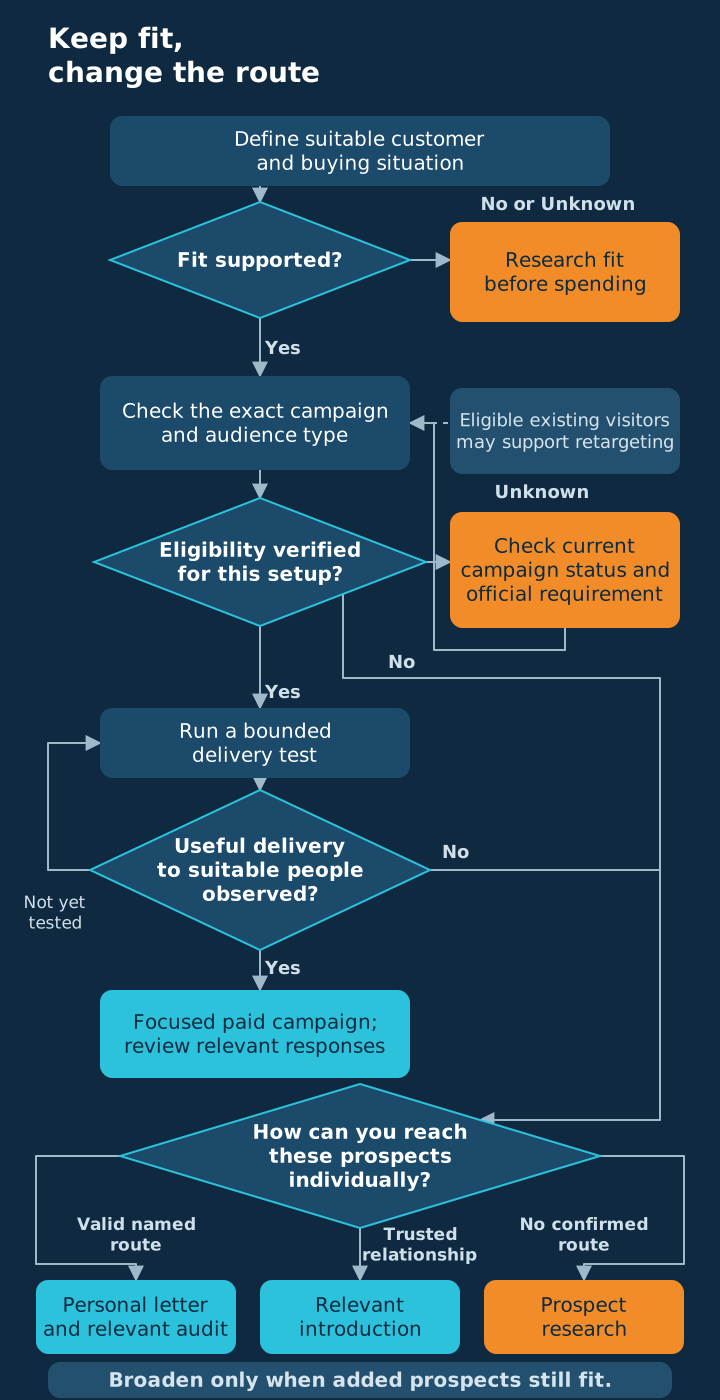
Decision rule. Keep a narrow audience when fit and delivery both work. Change the channel when fit is strong but usable reach is too limited. Broaden only when the added prospects still belong in your market.
THE PLATFORM FLOOR
Where does narrowing stop being useful?
Check eligibility before rewriting the ad. Stop narrowing when the chosen audience does not support the campaign's serving requirements or provide a useful test of the offer. Separate a published eligibility minimum from the delivery you actually observe.
Google publishes one hard floor worth knowing. A Display Network data segment is a retargeting list of past visitors. It needs at least 100 active visitors or users in the last 30 days before it can serve, per Google's guidance. Google counts those active users differently from the totals in Google Analytics or Firebase, so do not read your eligible audience off your traffic report.
That floor belongs to that audience type on that network. It says nothing about a radius campaign or another platform, and clearing it makes the segment eligible, nothing more.
| Question | What it establishes | What it leaves unanswered |
|---|---|---|
| Does this audience meet a published minimum? | It clears that eligibility requirement. | Delivery volume and commercial fit. |
| Does the campaign reach likely buyers? | The message gets a chance to be seen. | The audience's response to the offer. |
| Do likely buyers take the next step? | The offer creates interest. | The commercial value of the resulting work. |
Before you commit to a narrow audience, check two screens: the platform's current help page and the campaign's own status. If whoever runs your ads quotes a minimum, ask for the link.
THE HONEST COUNT
How should you size the audience you can actually reach?
Count reachable buyers. Build the count from qualified prospects and a way to reach them, starting with the customer definition that fits your service. Keep unknowns visible so that an attractive spreadsheet does not become a false promise of reach.
Start by writing a short customer definition that connects the service, the buying situation, and your ability to deliver it. "Owners of older commercial buildings facing an insurance inspection" tells you who to find and what to say. "Businesses near us" tells you neither. Work through the list in this order:
- Confirm which prospects fit the service and buying situation.
- Remove duplicates, unsuitable contacts, and people outside your service area.
- Identify a usable route to each prospect or to the advertising audience.
- Separate confirmed reach from assumptions that still need checking.
For a personal prospect list, a usable route might be a valid mailing address or an advisor willing to make an introduction. For an advertising audience, it means checking eligibility and delivery in that campaign. Keep these counts separate because a named prospect you can contact personally is not automatically a reachable advertising user.
Do not turn an unknown into a convenient estimate; those gaps tell you what to investigate next. If you have identified prospects but have not confirmed who buys the service, label the decision-maker as unknown. If an advertising audience has not been checked for eligibility, label its serving status as unverified.
The work of finding customers with permit data is one example of prospect research. The channel decision here starts after that research: can you approach the resulting prospects meaningfully through ads, or does the list call for individual attention? The quality of the source list leaves that delivery question unanswered.
Let your own job values and capacity decide. A letter plus a recorded audit makes sense for a large engagement and rarely for a routine, low-ticket job. Count the time needed for the approach alongside the cash expense so a polished package earns its effort. Include:
- Researching the prospect and recording the audit.
- Preparing and sending the letter.
- Handling replies and the next conversation.
Ask whoever runs your ads to explain what evidence would change the channel recommendation. A clear answer names the audience status, observed delivery, and quality of resulting conversations. An answer that only asks for a wider radius leaves you guessing whether the original constraint was fit, reach, or something else.
THE CHANNEL CHOICE
What should you do below the advertising floor?
Change the channel. When suitable prospects are too few for workable ad delivery, choose a channel that can reach them individually. Keep the audience definition intact unless you have a business reason to change it.
| Your situation | Best channel | Why |
|---|---|---|
| Short named list, each prospect well understood | Personal letter with a focused recorded audit | Lets you invest in relevance and address each prospect directly. |
| Short list reachable through trusted relationships | Introductions through an advisor or adjacent service provider | Gives the prospect a credible reason to consider the conversation. |
| Existing visitors, eligible and workable for the chosen campaign | Retargeting with an offer tied to their original interest | Reaches people who have already encountered your business, subject to the audience's serving requirements. |
| Qualified audience large enough for steady observed delivery | A focused paid campaign | Allows you to test an offer that fits the audience while monitoring who responds. |
| Audience too small for ads, with no usable personal route | Prospect research before another campaign | Repairs the reach gap instead of paying to approach unsuitable people. |
A mailed letter works best here when the personal effort creates a reason to reply. Explain the observation, offer a clear next step, and make the recorded audit easy to find. Keep the audit focused on something you can demonstrate, without claiming private knowledge about the prospect's business.
An introduction needs similar care. Ask the advisor if they know the prospect and would feel comfortable making the connection. Give them a short explanation of the fit so they can introduce you honestly. A copied endorsement or vague request to "send us anyone" shifts the research burden onto the relationship.
Below the floor. More money per approach can be sensible when the list is short and the fit is strong. Check that the effort improves relevance, access, or trust, rather than simply making the approach more elaborate.
Retargeting is another option only when an existing visitor audience supports the chosen campaign. It does not manufacture a visitor audience from an empty website or rescue a segment that cannot serve. Treat it as a way to continue the conversation, and check the audience's serving status before including it in the plan.
The trust requirement remains central across these approaches. Why cold outreach dies at the trust check explains why a prospect needs a credible reason to engage. Personalization helps when it demonstrates understanding; it adds little when it merely inserts a name into a generic sales message.
THE LAUNCH CHECK
What should you check before spending more?
Diagnose before spending more. Check fit, eligibility, and the quality of the next step before increasing the budget or broadening the audience. Choose a bounded test that can answer a real business question.
Write the question before approving the campaign, because questions about reach and response require different evidence. You might need to learn if qualified prospects recognize the problem, will request a conversation, or can be reached at all. A campaign that receives little delivery cannot provide a useful verdict about how prospects respond to the offer.
After launch, diagnose the earliest point where the process fails. Little delivery calls for reviewing eligibility and the campaign setup before judging the message. Likely buyers seeing the offer without responding calls for a different conversation about relevance, credibility, and the next step. Poor-fit inquiries suggest that the targeting definition needs attention.
Diagnose delivery first. A delivery problem cannot tell you whether the offer would persuade the right customer.
Do not change every variable after an inconclusive result. Preserve what you can verify, identify the unresolved constraint, and decide what the next test should teach you. That gives whoever runs your ads a clear job and gives you a reason to spend beyond hoping that more activity will help.
If the recommendation is to broaden, ask which additional customers fit the same service and why they belong in the audience. A defensible expansion brings more suitable prospects within reach. Expansion that abandons the customer definition may solve delivery while creating a new problem for the sales team.
For help evaluating the recommendation, book a conversation with Vista. Bring the audience definition, campaign status, and proposed next test so the discussion can focus on the constraint you can actually change.
Use this checklist before launch. You should be able to explain who fits the service, how you will reach them, and what the test must establish. If those answers remain unclear, resolve the gap before approving more spending.
- Describe the suitable customer and the buying situation in plain language.
- Confirm which audience type and campaign you are considering.
- Verify the applicable serving requirements from the current official source.
- Separate raw list size, eligible audience size, and unknown reach.
- Choose a next step that suits the prospect's likely level of trust.
- Agree on the test budget, review point, and evidence needed to continue.
- Identify a personal channel if the qualified audience falls below the campaign's serving requirements.
COMMON QUESTIONS
Frequently asked questions
Is a smaller advertising audience always better?
A smaller audience helps when it improves customer fit while supporting useful delivery; precision for its own sake can exclude suitable prospects. Define the buying situation first, then verify the campaign's requirements and observed reach before judging the offer. Change the channel if the right audience is too small.
What is the minimum audience size for local ads?
No single number applies. Each platform sets its own floor by audience type and campaign, so check the official help page for your exact setup. Then watch actual delivery once the campaign runs. If the right audience is too small to serve, switch to letters or introductions before widening the net.
Why might a neighborhood campaign receive almost no delivery?
A neighborhood-sized audience may be too limited for the selected campaign to serve usefully. Review the audience's eligibility, campaign status, and targeting setup before judging the message. Ask whoever runs your ads to show the diagnosis and explain how audience expansion or a personal channel preserves customer fit.
Should I widen the audience or increase the budget?
First identify whether customer fit, usable reach, or response to the offer is limiting progress. More budget does not make an unsuitable audience profitable, so widen only when the added prospects still fit your service. If suitable prospects are too few for ads, consider reaching them through individual approaches instead.
When is direct mail a sensible alternative to ads?
Direct mail can suit a short list of well-understood prospects when the likely value of the work supports a thoughtful personal approach. Use a specific observation and an easy next step, such as a focused recorded audit. Confirm the mailing route and customer fit before investing in more elaborate materials.
Can retargeting solve an audience that is too small?
Retargeting can continue a conversation with existing visitors when that audience supports the selected campaign. It still needs to meet the campaign's serving requirements and deliver usefully, so check its serving status before including it in your plan. When the visitor audience remains too limited, use another route to qualified prospects.
Frequently asked questions
- Is a smaller advertising audience always better?
- A smaller audience helps when it improves customer fit while supporting useful delivery; precision for its own sake can exclude suitable prospects. Define the buying situation first, then verify the campaign's requirements and observed reach before judging the offer. Change the channel if the right audience is too small.
- What is the minimum audience size for local ads?
- No single number applies. Each platform sets its own floor by audience type and campaign, so check the official help page for your exact setup. Then watch actual delivery once the campaign runs. If the right audience is too small to serve, switch to letters or introductions before widening the net.
- Why might a neighborhood campaign receive almost no delivery?
- A neighborhood-sized audience may be too limited for the selected campaign to serve usefully. Review the audience's eligibility, campaign status, and targeting setup before judging the message. Ask whoever runs your ads to show the diagnosis and explain how audience expansion or a personal channel preserves customer fit.
- Should I widen the audience or increase the budget?
- First identify whether customer fit, usable reach, or response to the offer is limiting progress. More budget does not make an unsuitable audience profitable, so widen only when the added prospects still fit your service. If suitable prospects are too few for ads, consider reaching them through individual approaches instead.
- When is direct mail a sensible alternative to ads?
- Direct mail can suit a short list of well-understood prospects when the likely value of the work supports a thoughtful personal approach. Use a specific observation and an easy next step, such as a focused recorded audit. Confirm the mailing route and customer fit before investing in more elaborate materials.
- Can retargeting solve an audience that is too small?
- Retargeting can continue a conversation with existing visitors when that audience supports the selected campaign. It still needs to meet the campaign's serving requirements and deliver usefully, so check its serving status before including it in your plan. When the visitor audience remains too limited, use another route to qualified prospects.
Vista Insights
Get new posts in your inbox
Practical AI and advisory insights for operators, sent as they publish. No spam, unsubscribe anytime.

Founder, Vista Advising Group. Writes about using AI for real operating work.
Keep reading
- Reading the AI Landscape
Rent the Core, Own the Glue
Keep the specialized platform that works, buy on available access, and own a narrow bridge with clear rules, maintenance, and a fallback.
- Using AI
Write the Follow-Up Cadence Before You Automate One Reminder
Write stage-by-stage contact standards, automate routine messages, alert on missed checkpoints, and test each rule before go-live.
- What's Stuck
The Margin Field Nobody Checks: A Quote-Template Audit
Audit added lines, upgrades, cost feeds, and approvals to find margin leaks hidden inside a trusted quote template.