
Reading the AI Landscape
Rent the Core, Own the Glue

Rent the Core, Own the Glue
Keep the industry platform for the job it performs uniquely well, and own the small bridges and reports around it. Buy on what works today; a promised API counts for nothing until it moves one of your real records. Build a narrow connection only when you can name its maintainer and its fallback.
Key takeaways
- Keep the platform when its core job is hard to replace and works well.
- Choose software on working capabilities, not a promised API or connector.
- Own a narrow bridge and reporting layer with clear business rules.
- Use AI to reduce building effort while keeping maintenance and approval human.
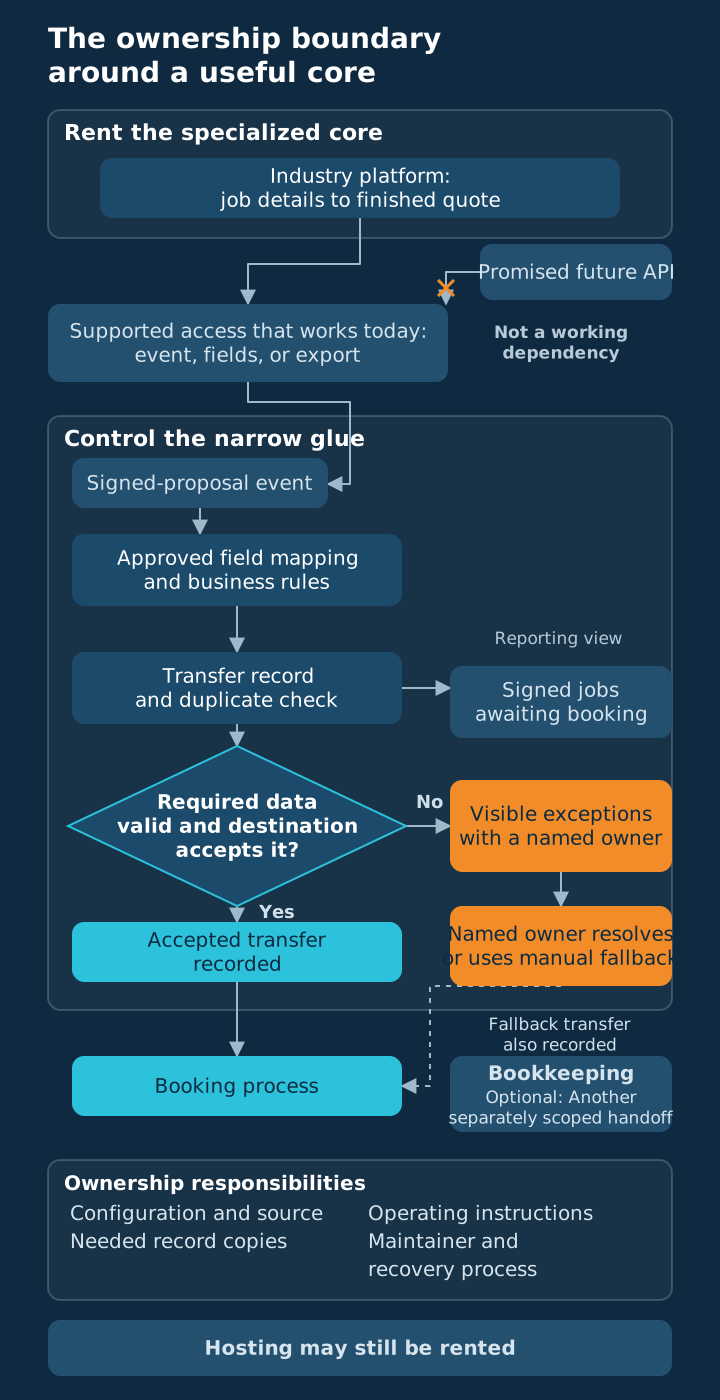
In a composite Vista engagement, an industry platform turned job details into a finished quote especially well, while booking, bookkeeping, and field-level connections remained gaps. In plain terms, the platform could hand over a finished quote document, but no other system could read the line items or price inside it. The team kept the platform for its core job and bridged the surrounding work through a small automation layer the team controls.
They were frustrated during setup. They kept the platform anyway, because nothing else did the core job as well. Ripping it out would have traded a handoff problem for a core problem.
Keep the useful core. Fix the missing handoff.
We also encounter promises of APIs and agent connectors without a firm delivery date or a working way to test them. An API is a supported way for software systems to exchange information and requests. We have watched teams buy around a roadmap promise and live with the gap for months. A promised API is worth nothing to you until it works with your actual records.
So decide which part stays rented and which small part you control. You do not need to reproduce a specialized platform to take ownership of a missing handoff. Begin with the work customers and staff need completed, then draw a boundary around the smallest connection that serves it.
THE DECISION
Should you keep the platform, replace it, or build a bridge?
Rent what already works. Keep a platform whose core works and would be difficult to reproduce; replace it when the core fails essential requirements. Build glue when a narrow, supported connection can close a defined gap without taking over the whole product.
| Choice | When it fits | What to verify before committing |
|---|---|---|
| Keep and rent | The specialized core performs the required job reliably | Real records produce usable outputs, with a workable route into the next process |
| Replace | The core cannot meet essential needs, or restrictions make the overall process unworkable | A tested alternative performs the core job and has a practical migration path |
| Build glue | The core works, but a specific handoff or report is missing | Supported access exists today, the scope is narrow, and someone can maintain the bridge |
Name the irreplaceable output in ordinary language, such as turning job details into a finished quote the team can use. Test that output with a representative job instead of judging the platform by its feature list. Include the awkward cases your business handles, because a neat demonstration may leave the difficult work outside the frame.
Next, describe the surrounding gap separately from the core capability so frustration does not turn into an unnecessary rebuild. A missing booking handoff does not automatically mean the proposal engine is poor. Equally, a working quote engine does not excuse a restriction that prevents the business from operating. Both judgments belong in the decision.
- Identify the specialized job you would struggle to reproduce and the output that proves it works.
- Name the missing handoff precisely, including the information and receiving process that need it.
- Check whether today's supported access can complete that handoff before choosing to keep, replace, or build.
This post assumes that you have a reason to connect the processes and want to decide who should control the connection. If that reason is still unclear, use Vista's guidance on when not to integrate systems first. Return to ownership once you can name a defined outcome and identify the cost of the current gap.
THE BOUNDARY
What does glue mean, and what should you own?
Own the bridge's business rules. Glue is the small layer that moves needed information between tools and makes the combined process understandable. Own its business rules, records, and instructions while continuing to rent the specialized core and routine infrastructure where that makes sense. You only own it if someone on your team can explain it, change it, and restore it.
An automation layer runs the agreed handoff, such as passing a signed proposal into a booking process. A webhook is a notification that something happened, allowing that layer to react without someone checking the screen. A small database can hold the shared record and transfer status, while a reporting view presents information in language the owner understands.
You do not need all of them. A dependable export and a simple reporting view may be enough for the gap you have. Use Vista's guide to auditing the seams of your stack to describe what fails at the handoff. The result should identify a specific record or action that needs attention.
| Rent or retain | Own or control |
|---|---|
| The industry platform's specialized calculation or proposal engine | The meaning of the fields your bridge moves |
| Routine hosting or storage services where appropriate | The business's copies of needed records and transfer history |
| Supported access supplied by the platform | The bridge configuration, source files, and operating instructions |
| Standard software capabilities already available | The reporting definitions and process for correcting errors |
Owning glue does not require keeping every service on a computer in your office. Running your own infrastructure means maintaining its availability as well as the automation itself. A rented hosting service can carry the bridge if you control the files, access, and instructions needed to move it.
For example, the bridge might recognize a signed proposal, pass approved booking details, and record whether the receiving process accepted them. The report could then show signed jobs awaiting booking, with a person assigned to resolve failures. That is a bounded connection, with a business outcome someone can inspect. It does not need to recreate quoting, scheduling, and bookkeeping inside a new application.
Keep the bridge from making decisions the business has not agreed to delegate. If a receiving tool rejects a field or a job lacks required information, show the exception to its owner.
A visible failed transfer is more useful than a quiet guess.
BUYING RULE
What should you do with a promised API?
A promise is not a capability. Buy for the capabilities available and demonstrable today, treating a promised API as a possible future improvement. If your process depends on that connection, require a working test before making it part of the buying decision. A roadmap entry cannot carry a live customer handoff while the team waits for delivery.
Ask the vendor to demonstrate the exact access your bridge needs with a representative record and your proposed receiving process. A general claim that integrations are supported does not answer whether the required fields can be read or updated. A connection that produces a document may still leave the individual job details unavailable for booking or reporting. Use a short verification list before accepting the proposed route into your process:
- Can you access the specific event, fields, and actions the handoff requires using a supported method today?
- Can someone demonstrate a successful transfer and a failed transfer, with a clear way to recognize each outcome?
- Can the team export the needed records and maintain an interim process if the connection stops working?
An "agent connector" gets the same test as any other integration. The label tells you nothing about whether it can read the fields you need or whether your team can recover when it fails.
If the core platform is worth keeping without the promised connection, write down the interim workflow before approving the purchase. It might involve a controlled export and a named person checking each handoff. Make that work visible in the operating plan instead of pretending the future connection has already removed it.
If the interim workflow is unacceptable and there is no supported bridge, the dependency remains unresolved. Choose an alternative or defer the decision until the capability can be tested. A repeated promise of imminent access does not change the current operating requirement or give staff a way to finish the work.
Before building around any gap, check the capabilities you already pay for. An existing export, field mapping, or report may cover the requirement adequately. Finding a usable route can reduce both the proposed build and the number of moving parts someone must maintain later.
BUILDING EFFORT
How does AI-assisted building help without creating a maintenance trap?
Maintenance still belongs to you. AI-assisted building can reduce the effort of drafting a small bridge, but the business must still own its operating decisions and upkeep. In our work, AI's real payoff is the small bridge nobody would have built by hand. The saving loses value if nobody can maintain or repair what gets built.
An AI assistant can help draft the field mapping, transformation code, and a simple reporting view from a clear specification. Give it examples of approved inputs and expected outputs, including records that should stop the process. Someone who understands the work must check the result, because a plausible transfer can still use the wrong date, value, or customer identifier.
Vista's Good-Enough-For-You framework. Build to the standard that makes the specific job useful and dependable for your business. A rough interface can be acceptable when the records are correct, failures are visible, and ownership is clear. Stop short of recreating the platform around a missing handoff.
Keep the bridge narrow by writing what it will move, what it will not decide, and what happens when it cannot proceed. Let rough presentation remain rough if the operator can read it easily and act on exceptions. Accurate fields, a working recovery process, and accessible instructions come before decorative polish or extra features.
The biggest risk for a small business is the one-person bridge. The office manager who built it leaves, or forgets why a rule exists. Keep the operating instructions with the source files and make sure another responsible person can follow them successfully.
| Risk | Limit it with |
|---|---|
| The source system changes a field or connection | A named maintainer, representative test records, and a check after relevant changes |
| Only the builder understands the bridge | Plain instructions and a second person who can stop, inspect, and restart it |
| A transfer repeats or fails quietly | A transfer record, a duplicate check, and an exception list |
| The bridge grows into another full platform | A written scope and approval before adding another responsibility |
Agree what the team does when the bridge is unavailable, including how it tracks work completed through the fallback. Practice restoring the service and checking the affected records before the business depends on it. Someone should also know how to stop it promptly if it starts passing incorrect information into the next process.
Use Vista's approach to building a rough AI tool that is good enough for you to keep the scope tied to a defined result. Good enough still needs correct records and a manageable failure path. Good enough means you stop polishing once it works. It never means lowering the bar for what works.
THE VERDICT
When should you build the glue, and when should you stop?
Build the glue when the core works, the missing connection matters, and supported access makes a narrow bridge practical today. Stop when the connection depends on an unshipped capability, has no maintainer, or would require recreating the platform. Owning a layer helps only if the business can carry its responsibilities.
Build the glue if
- The platform completes a specialized job you need and would struggle to replace with a tested alternative.
- You can describe the missing handoff, its required information, and the outcome the receiving process must produce.
- The required access works today, and the business can name a maintainer, fallback, and clear approval boundary.
Prove all three before you approve the build. Begin with the smallest handoff and inspect it with representative records. Keep a written record of what is accepted, what is rejected, and who acts when the transfer needs human attention.
Don't build it if
- The essential API or connector exists only as a promise, without a working route for today's required handoff.
- The proposed bridge must replace the core application or take responsibility for decisions nobody has defined.
- Nobody can maintain the layer, restore its records, or explain how staff keep working when it stops.
When these conditions apply, revisit the boundary, use a documented manual handoff, or reconsider the platform if its core no longer justifies keeping it. Avoid burying unresolved work inside a technically impressive bridge. The owner needs a process that stays understandable when the builder is unavailable and the next customer is waiting.
For help turning a specific gap into a bounded build, join Vista's AI Collective. Bring an example record, the required receiving outcome, and the current fallback. Those inputs support a concrete decision about whether the business should keep renting, replace the core, or own a small piece of glue.
COMMON QUESTIONS
Frequently asked questions
Control requires a maintainer. These answers clarify which layer the business should own, what access it must prove, and who keeps the bridge running. Use them to check the ownership boundary before approving a build or renewing a platform the team depends on.
What does rent the core, own the glue mean?
Keep paying for the specialized platform capability your business needs, while controlling the small connections and reporting rules around it. The glue moves agreed information and makes handoffs visible. Ownership includes the configuration, needed records, instructions, and responsibility for maintaining the layer, even when it runs on rented infrastructure.
What counts as glue between business systems?
Glue can be an automation layer, an event notification, a small shared database, or a reporting view. Its purpose is to complete a defined handoff without rebuilding the core software. A simple export may be sufficient when it provides the needed information and someone can verify and manage the transfer.
Should we buy software because an API is coming?
Base the decision on capabilities you can test today. If the purchase only works for your process after a promised API arrives, the dependency remains unresolved. Keep a platform for its current core value only when the interim workflow is acceptable, and document who owns that work while access remains unavailable.
Does owning the glue require your own infrastructure?
You can control a small automation layer without running your own infrastructure. Rented hosting can carry the bridge while your team controls its files, rules, access, and instructions. Assign responsibility for availability and upkeep, and choose a setup the business can maintain and move when its needs change.
Can AI build the bridge without technical review?
AI can help draft the mapping, code, and reporting view from approved examples. A person who understands the work still needs to verify fields, outcomes, and failure behavior. Test representative records and recovery before relying on the bridge, and assign a maintainer who can explain, stop, and repair it.
When is replacing the platform a better decision?
Replace the platform when its core cannot meet essential requirements or its restrictions leave the overall process unworkable. Test an alternative on the specialized job before committing, and plan how existing records and live work will move. A missing peripheral feature alone does not establish that replacing the core will help.
Frequently asked questions
- What does rent the core, own the glue mean?
- Keep paying for the specialized platform capability your business needs, while controlling the small connections and reporting rules around it. The glue moves agreed information and makes handoffs visible. Ownership includes the configuration, needed records, instructions, and responsibility for maintaining the layer, even when it runs on rented infrastructure.
- What counts as glue between business systems?
- Glue can be an automation layer, an event notification, a small shared database, or a reporting view. Its purpose is to complete a defined handoff without rebuilding the core software. A simple export may be sufficient when it provides the needed information and someone can verify and manage the transfer.
- Should we buy software because an API is coming?
- Base the decision on capabilities you can test today. If the purchase only works for your process after a promised API arrives, the dependency remains unresolved. Keep a platform for its current core value only when the interim workflow is acceptable, and document who owns that work while access remains unavailable.
- Does owning the glue require your own infrastructure?
- You can control a small automation layer without running your own infrastructure. Rented hosting can carry the bridge while your team controls its files, rules, access, and instructions. Assign responsibility for availability and upkeep, and choose a setup the business can maintain and move when its needs change.
- Can AI build the bridge without technical review?
- AI can help draft the mapping, code, and reporting view from approved examples. A person who understands the work still needs to verify fields, outcomes, and failure behavior. Test representative records and recovery before relying on the bridge, and assign a maintainer who can explain, stop, and repair it.
- When is replacing the platform a better decision?
- Replace the platform when its core cannot meet essential requirements or its restrictions leave the overall process unworkable. Test an alternative on the specialized job before committing, and plan how existing records and live work will move. A missing peripheral feature alone does not establish that replacing the core will help.
Vista Insights
Get new posts in your inbox
Practical AI and advisory insights for operators, sent as they publish. No spam, unsubscribe anytime.

Founder, Vista Advising Group. Writes about using AI for real operating work.
Keep reading
- Choosing an Advisor
Go Narrow on Ads, But Not Below the Floor
Focus a small ad budget on high-fit prospects, check the campaign's delivery floor, and choose personal channels when the audience is too small.
- Using AI
Write the Follow-Up Cadence Before You Automate One Reminder
Write stage-by-stage contact standards, automate routine messages, alert on missed checkpoints, and test each rule before go-live.
- What's Stuck
The Margin Field Nobody Checks: A Quote-Template Audit
Audit added lines, upgrades, cost feeds, and approvals to find margin leaks hidden inside a trusted quote template.