
Built by Logan / Case study / Hard-to-get data, made usable
Foothill Intel Intelligence
A roofing company in the Treasure Valley runs on a connected set of systems that tell it where the next job is, make the creative to go get it, and keep every piece of media and every lead under one review. Public ads, reviews, permits, and parcels come in; approved campaigns and CRM stages go out.
- BHard-to-get data, made usable
- DBusiness intelligence
- CSoftware you own
- AMaking things people see
- $15k $30kto
- what a dedicated development team would charge to build it
- $40,000
- what Logan would charge to build it for you
- About$400
- in software and AI usage to build it internally (your team's time excluded)
- 5months
- from the first planning file to eighteen connected systems, built alongside other projects
Team figure is the founder's estimate of what a dedicated team would charge, not a quote. Internal figure is reconstructed from usage records. 97 commits across 12 active days since version control began in August; most systems predate it.
What problem does it solve
Guesswork is expensive in roofing.
Which neighborhoods to mail, which streets already re-roofed, which competitor ads are actually working, which photos are safe to post: every one of those was a judgment call made from memory. Agencies sell each answer separately and none of them talk to the CRM.
What impact does it have
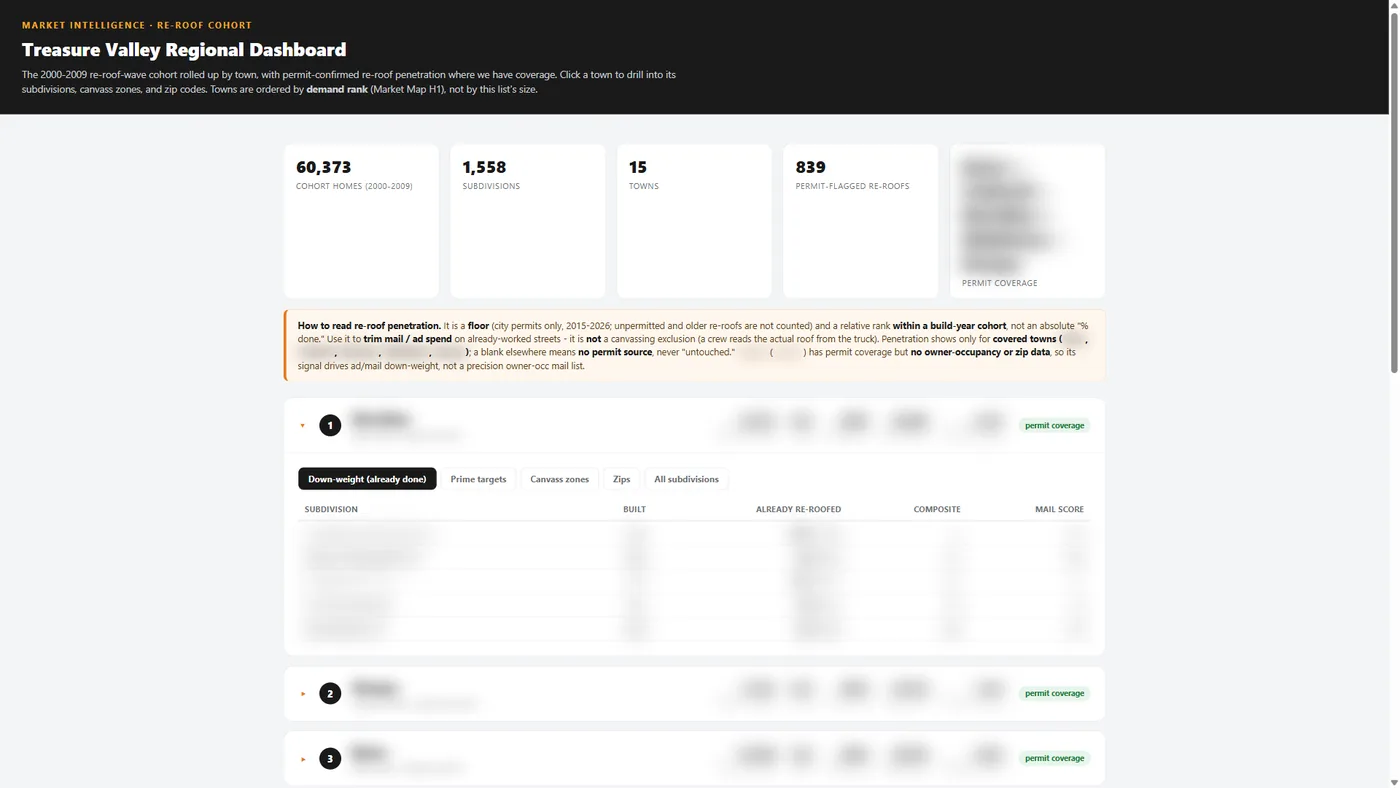
60,373 rooftops scored. 12,541 permits joined.
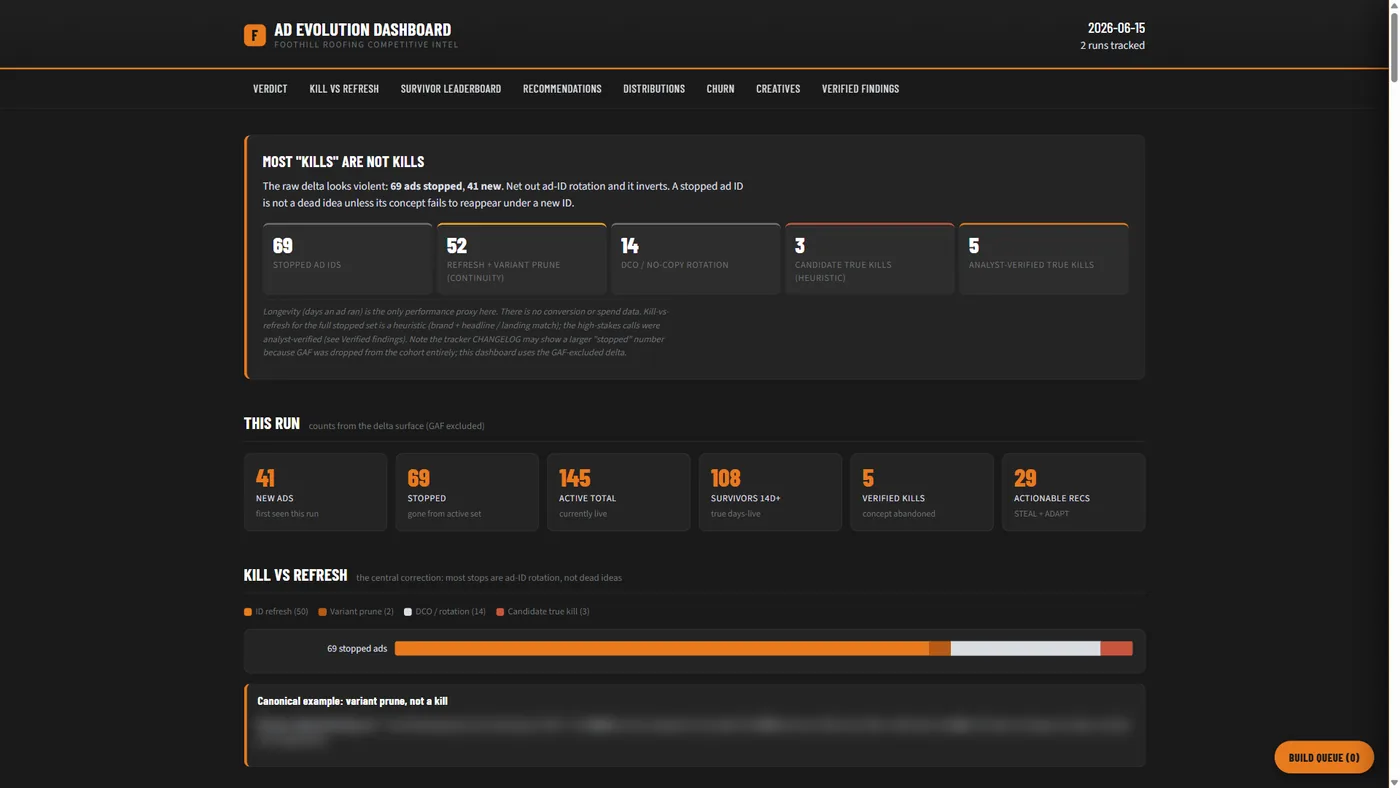
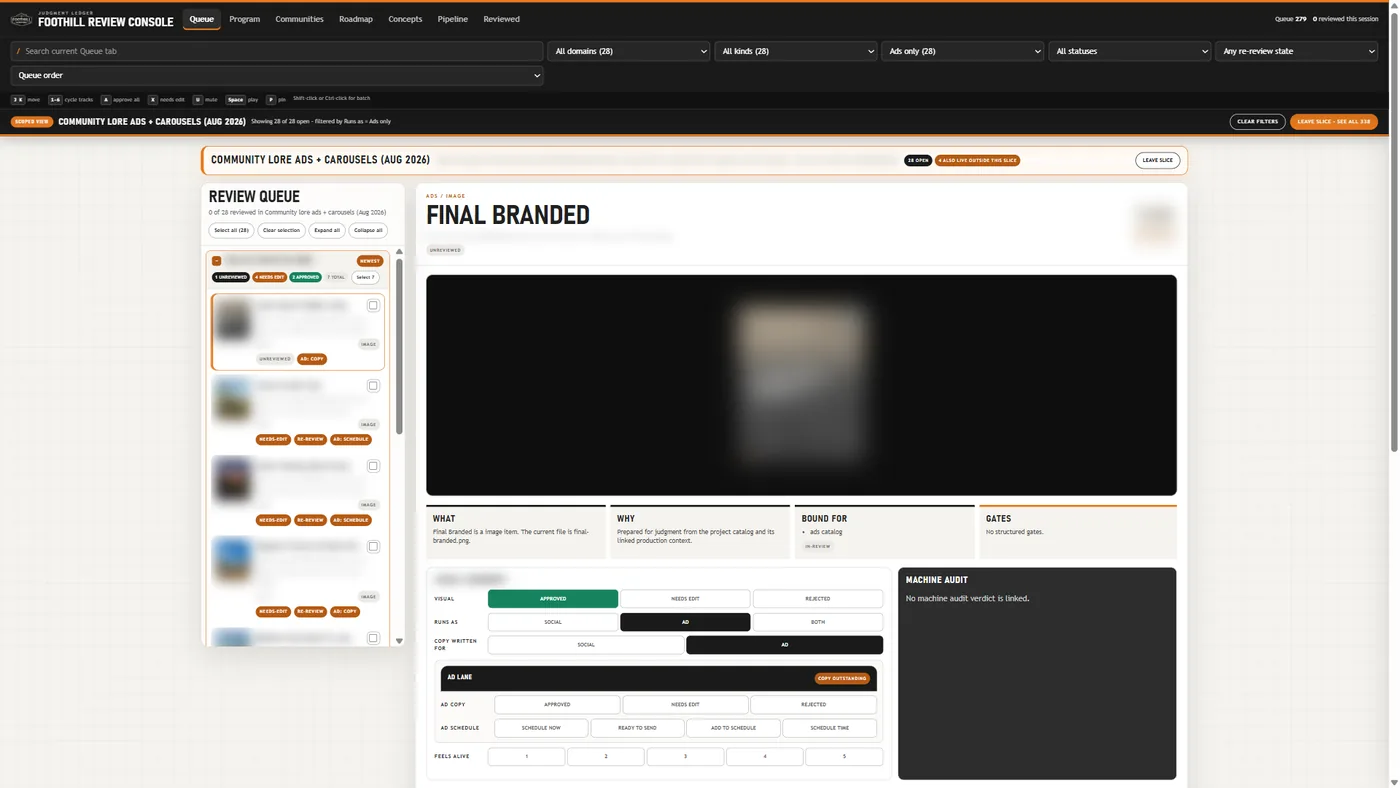
The targeting engine ranks 1,558 subdivisions and 228 canvass zones from public parcel and permit records, suppressing streets that already re-roofed. The ad tracker follows 25 competitors run after run and tells real concept kills from ID refreshes. A media catalog indexes 8,110 assets in place, and a review console with an append-only ledger decides what ships.
What value does it have
One loop, owned end to end.
Evidence flows into decisions, decisions into creative, creative through human review, and approved work into the CRM and the estimating tool, with a publish gate that refuses anything unapproved. Every layer is code the company owns, so the next town, the next campaign, and the next channel are configuration, not a new vendor.
What it does today
Eighteen systems on one loop. Everything below runs for a real roofing company.
Market intelligence
- Meta Ad Evolution Tracker: longitudinal history across 25 competitor advertisers, kill-vs-refresh logic, survivor rankings
- Local market observatory: 176-contractor roster, 1,153 reviews mined, LSA and Google Search presence maps, one executive state-of-market report
- Permit and community targeting: parcels, subdivision cohorts, drive time, and five city permit portals joined into channel-specific scores and mailable lists
- Commercial property targeting: 11,707 commercial parcels enriched, ranked, and routed, with permit-based suppression
Creative production
- Social image engine: JSON spec to brand-safe PNG in about 300 milliseconds, eleven templates, automated QA
- Community creative factory: pin-specific ads, map heroes, captions, carousels, and mail pieces for 53 subdivision families
- Video production engine: seven gated stages from footage or concept to a Remotion timeline, with per-scene intent and a budget lock
- Brand system and document kit: palette, voice, and five Word masters consumed by every downstream tool
Review and governance
- Unified asset catalog: 8,110 records across ads, video, photos, print, and social, indexed in place
- Media review console: scoped queues, side-by-side dossiers, three-track judgments, feedback pins, append-only ledger
- CompanyCam photo triage: 2,505 photo records classified for content reuse
- Publish gate: approved visual and copy tracks required; held or unreadable state fails closed
Website and operations
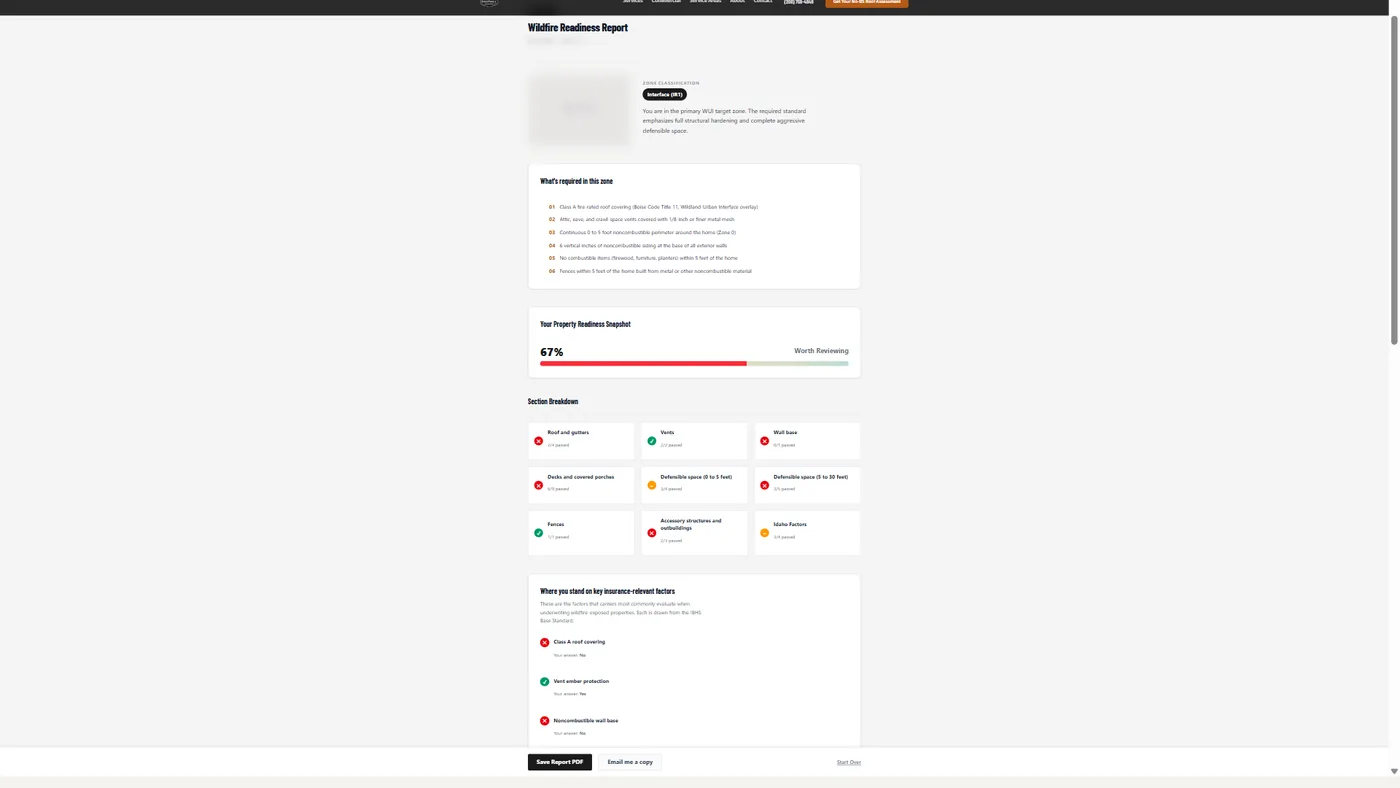
- Astro website with ten service-area pages and an address-aware wildfire readiness tool
- GHL CRM spine: nine-stage pipeline, consent-gated messaging, workflows triggered from every system
- Roofr-to-CRM revenue bridge: proposal sent, signed, and lost events drive stages and attribution, replay-safe on proposal ID
- Proposal compute core: three roofing tiers from one measurement behind a never-send interlock
- Meta bulk-import generator that targets the official 143-column template and refuses invalid batches
- Supervised social publisher that schedules only approved posts and reads back the result
On the roadmap
- Commercial outreach engine (drafted, behind legal and spend gates)
- CompanyCam operations rollout
- In-app content performance loop
Why owning it matters
The evidence is the moat.
Permit joins, parcel cohorts, ad history, and review mining accumulate every week. An agency starts from zero for every client; this starts from everything it already knows.
Safety is structural, not a policy.
Nothing publishes without two approved tracks. Nothing sends from the estimating account. Nothing runs paid generation past the budget lock. The rules live in code, not in a reminder.
Every new channel is a config change.
A new town is a new permit collector. A new ad format is a new template. The loop stays the same and the company keeps the asset.
Why the operator built it
Why an agency retainer could never have produced this.
The questions came from the field.
Which streets already re-roofed, which subdivisions were built in the years that matter, which competitor really stopped an ad: those are a roofer's questions, not a marketer's. Working the answers directly with AI, one dataset at a time, produced systems no agency brief would have asked for.
Eighteen systems, one thread.
An agency would have quoted the website, the ads, the video, and the CRM as four engagements with four handoffs. Here the same operator built each piece to feed the next, and the review ledger sits in the middle of all of it. The value is in the connections, and connections are what outside teams cannot own.
Five months, alongside everything else.
From the first planning file to a targeting engine, a creative factory, a review console, and a live CRM bridge took five months of part-time building. No single agency deliverable in that time would have been worth as much as the loop.
That is what the Vista AI Cohort teaches: operators building their own software, with a community for the parts that need a second set of eyes.
See it
Real screens from the loop, captured locally. Places, customers, and campaign details blurred.
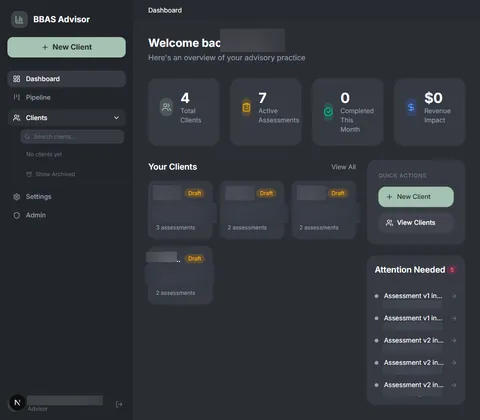 Next project · In productionBusiness Bottleneck AssessorA validated diagnostic that finds the constraint holding a business back and sizes the headroom behind it.
Build your own advantage.
Get a personal AI trainer and a community for the parts that need a second set of eyes.