
Built by Logan / Case study / Software you own
RFP and RFQ Bid Engine
A commercial signage contractor was answering three or four tenders a month by hand. The engine now reads the tender, prices the scope, builds the issuer's exact submission package, and files it with a read-back receipt, while a human keeps every decision that matters.
- BHard-to-get data, made usable
- CSoftware you own
- DBusiness intelligence
- AMaking things people see
- $350,000+
- what a dedicated development team would charge to build it
- $25,000
- what Logan would charge to build it for you
- About$130
- in software and AI usage to build it internally (your team's time excluded)
- 12days
- from the first investigation note to verified live submissions, built alongside other projects
Team figure reconciles two independent replacement-cost estimates, not a quote. Internal figure is reconstructed from usage records. 8 active build days, 54 commits.
What problem does it solve
Tenders are buried work.
A construction tender arrives as hundreds of files and thousands of pages. Finding the sign scope, the wage rules, the bond terms, and the quantities took a full day per bid, so the contractor could only chase a handful a month. Every issuer also wanted the answer in a different shape: their workbook, their questionnaire, their portal.
What impact does it have
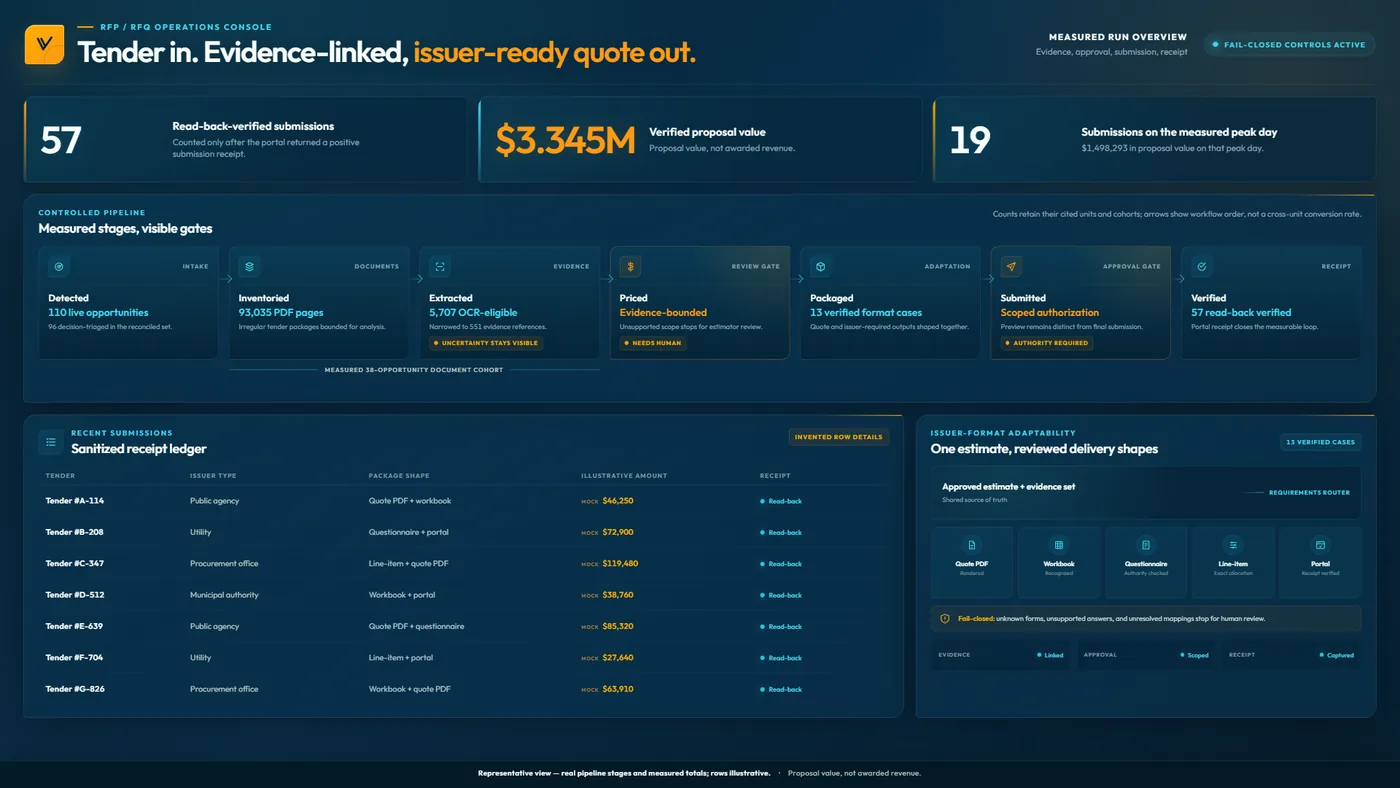
57 verified submissions. $3.3M in proposals.
In the measured run the engine turned out fifty-seven submissions, each confirmed by the portal's own read-back, with a peak of nineteen in a single day. Ninety-three thousand PDF pages narrowed to the 551 pages that actually carried evidence. The contractor went from three or four bids a month to a pipeline of more than a hundred live opportunities.
What value does it have
Volume without losing control.
Every price traces back to the page it came from. Unresolved scope stays flagged instead of being guessed. Approval is scoped to one opportunity and one value, never a blanket yes. The contractor now competes for public, utility, and federal work that was never worth the paperwork before, on software it owns.
What it does today
A working pipeline, not a demo. Everything below ran on real tenders.
Intake and evidence
- Tender folder inventory with reason-coded take/skip rules
- Safe, resumable download of only the files that matter
- Native text extraction with page-level OCR only where needed
- Evidence dossier: scope, quantities, wage rules, bonds, drawings, coverage report
- Jump from any concern or quantity back to its source page
Pricing and proposals
- Signage pricing engine with low, typical, and high scenarios
- Prevailing-wage and non-prevailing-wage handling
- Refuses to price scope it cannot defend; flags what still needs an estimator
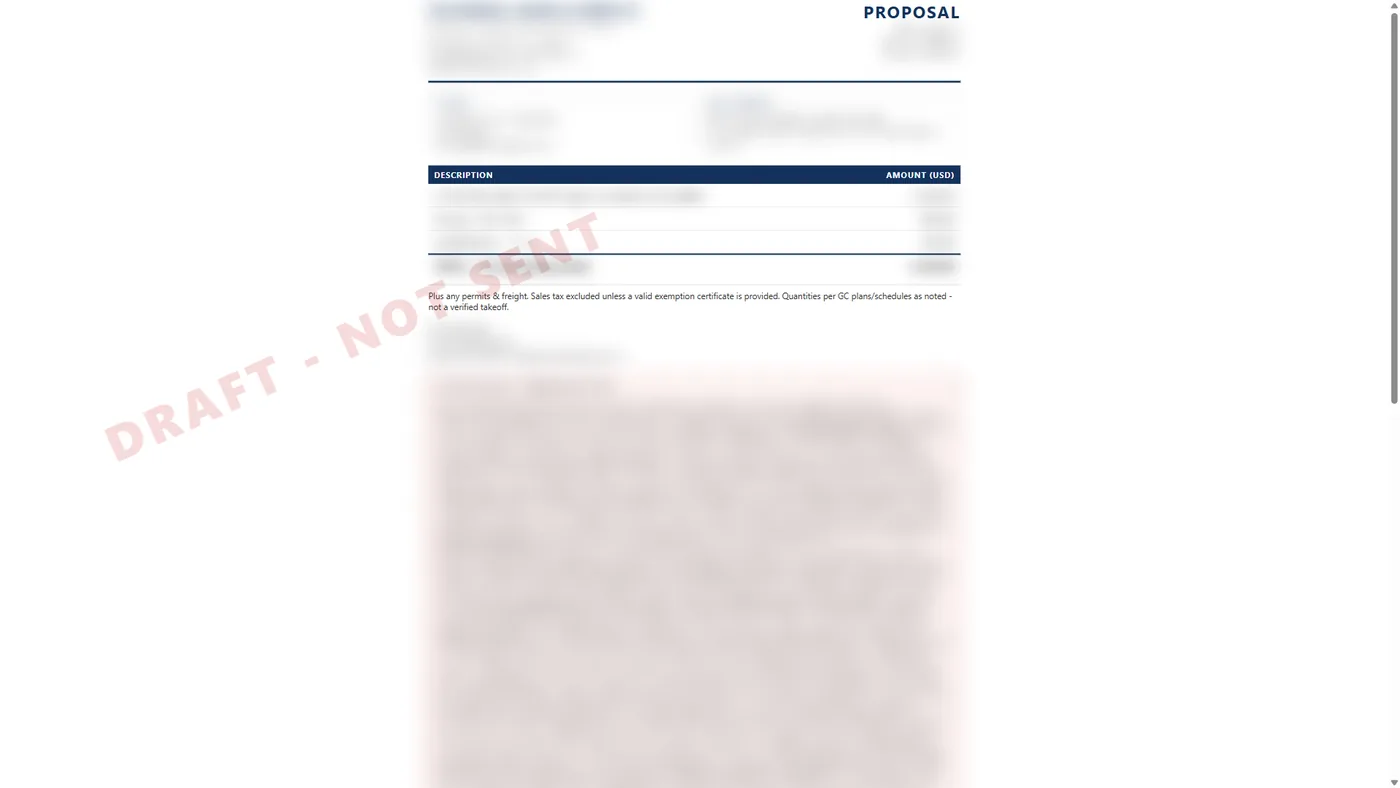
- Client-ready quote as email text, HTML, and PDF, with draft and final controls
- Voice and structure recovered from the contractor's own past proposals
Submission
- Issuer-shaped packages: quote, filled bid workbook, questionnaire, line items, manifest, cover
- Exact row mapping that must sum to the approved total
- Unknown form formats stop for a human instead of guessing
- Portal automation with preview mode, scoped authorization, and post-submit read-back verification
- Thirteen verified submission patterns across private, public-agency, utility, and federal buyers
Review and audit trail
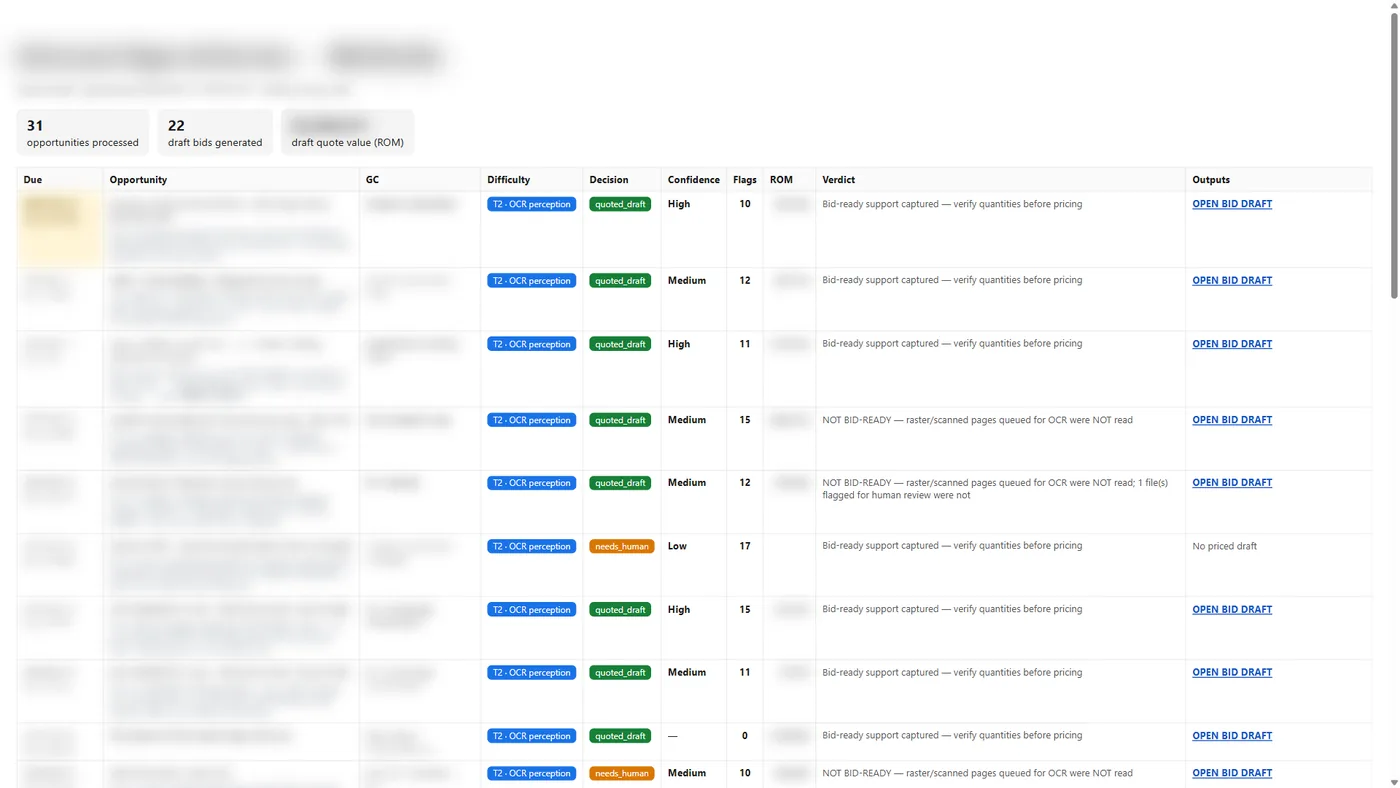
- Operator and estimator review console grouped by due window
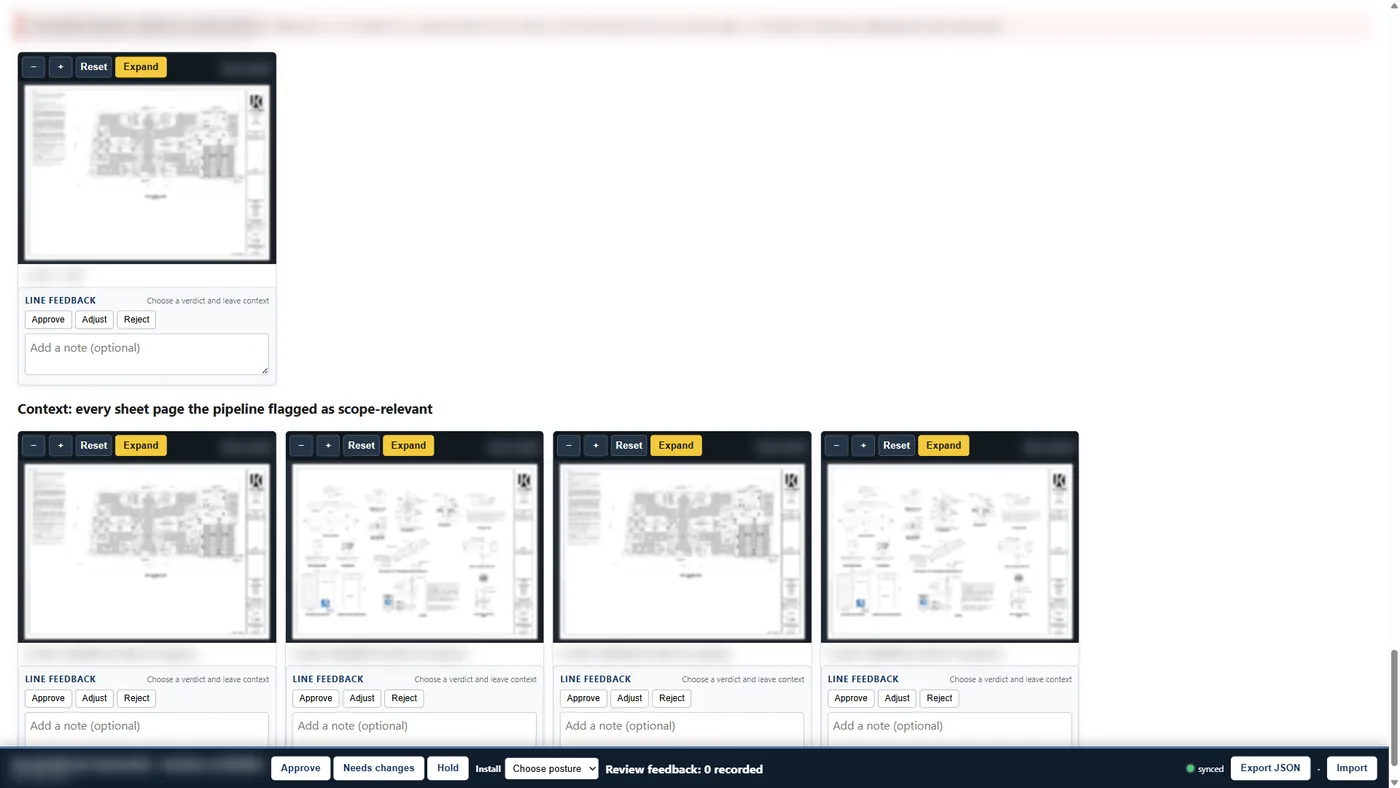
- Approve, needs changes, or hold, with installation posture and line adjustments
- Redacted share view for outside eyes
- Append-only ledger of every file, artifact, quote, decision, and submission
- Restartable pipeline: every count resolves to a record
On the roadmap
- Automatic RFI drafting for unresolved scope
- Win/loss feedback into the pricing engine
- Multi-trade scope beyond signage
Why owning it matters
Built for one trade.
The pricing logic, the proposal voice, and the issuer patterns are the contractor's, not a vendor's average of every industry.
Safe by design.
A human approves every submission. The engine can build, but it cannot send without scoped authority, and it says so in the ledger.
Compounds with every bid.
Each tender teaches the engine a new issuer shape. The next bid in that shape takes minutes.
Why the operator built it
Why an outside team could not have built this one.
The estimator's judgment was the spec.
Which pages of a 1,200-page tender matter, when prevailing wage applies, what a sign quantity really means on a drawing: none of that was written down anywhere. It lived in the estimator's head. Talking to AI while looking at real tenders turned that judgment into rules in days; a dev team would have spent the first month just discovering what to ask.
Every issuer broke the last version.
The engine changed shape on almost every bid: a new workbook format, a questionnaire with a yes/no that carried legal weight, a portal that demanded a read-back. An outside team would have scoped each of those as a change order. Here, the fix was described in the morning and ran on the afternoon's bid.
Twelve days, eight of them building.
From the first investigation note to fifty-seven portal-verified submissions took twelve calendar days, alongside other projects. The engine was earning proposals before a hired team would have finished discovery.
That is what the Vista AI Cohort teaches: operators building their own software, with a community for the parts that need a second set of eyes.
See it
Real screens from the engine, captured locally. Client, issuer, and pricing details blurred.
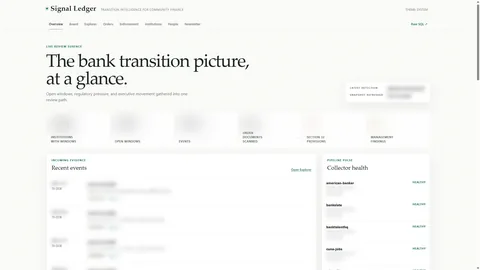 Next project · BuiltBank Signal EngineEighteen public sources, 8,586 institutions, one daily queue of bank leadership openings, found while the seat is still empty.
Build your own advantage.
Get a personal AI trainer and a community for the parts that need a second set of eyes.