
Built by Logan / Case study / Software you own
Source D'Amour Platform
A two-maker gemstone studio replaced its entire stack of rented software with one platform it owns outright. From a phone photo of rough stone to the final sale, every step runs on code built for exactly how they work.
- AMaking things people see
- CSoftware you own
- DBusiness intelligence
- EBusiness operating system
- $250,000+
- what a dedicated development team would charge to build it
- $25,000
- what Logan would charge to build it for you
- About$850
- in software and AI usage to build it internally (your team's time excluded)
- 8weeks
- from first commit to running the business, built alongside other projects
Team figure reconciles three independent replacement-cost estimates, not a quote. Internal figure is reconstructed from hosting, domain, email, and pro-rated AI subscriptions. 316 commits across 34 active build days.
What problem does it solve
Five tools. Zero agreement.
Stock lived in spreadsheets and camera rolls. Publishing a piece meant typing it twice. Selling at a show meant guessing what was still available. Every rented tool held a slice of the truth, and the studio paid monthly for all of them.
What impact does it have
One record. Every channel.
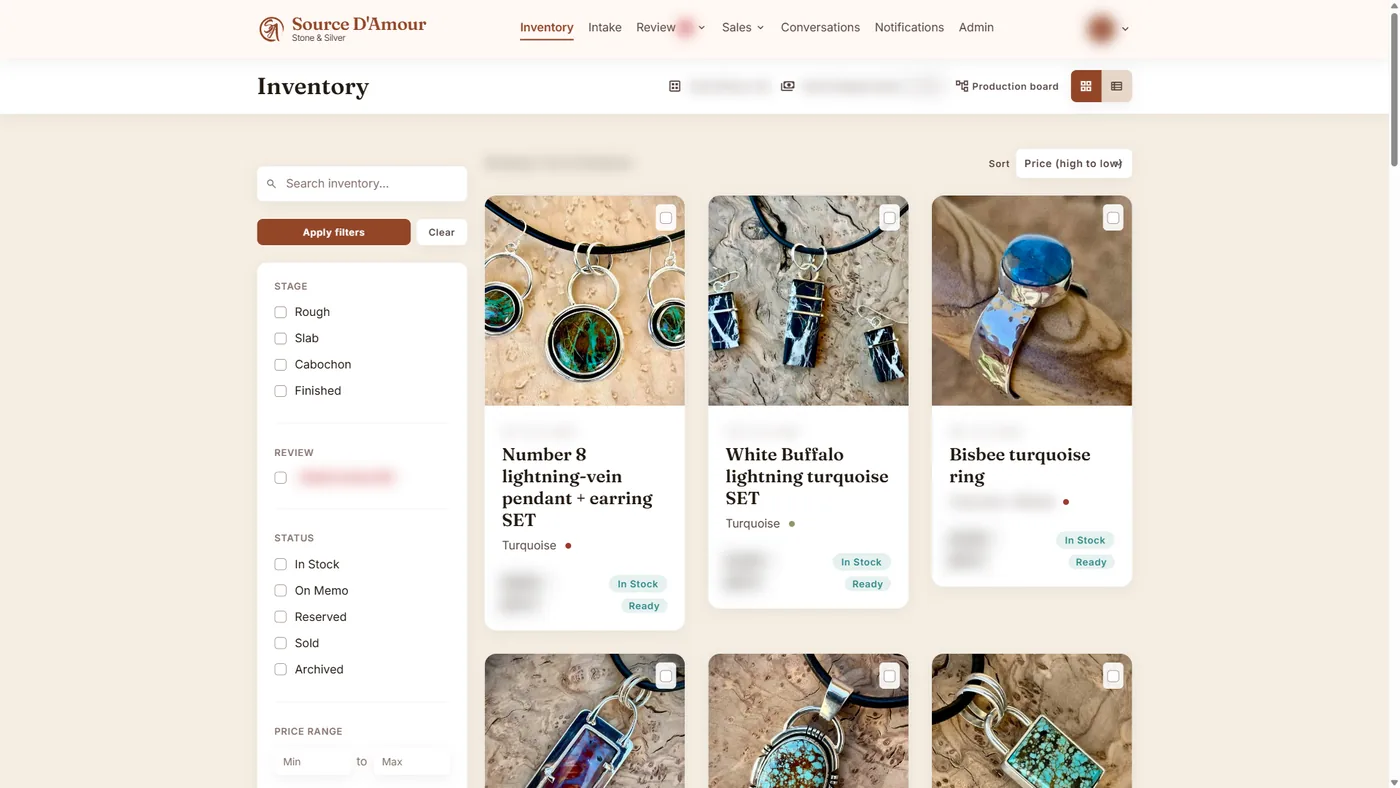
A maker photographs material on a phone and the platform mints the SKU. Inventory, the public storefront, buyer line sheets, labels, and sales all read from that single record. Backups and automations run every night without anyone remembering to.
What value does it have
Owned, not rented. Built to bend.
The platform lives on a server the studio controls. No subscription can be cancelled out from under it, and when the business changes, the software changes with it. It does things no off-the-shelf tool ever will, because it was built for this business alone.
What it does today
A working feature set, not a roadmap. Everything below is live in the studio.
Inventory and production
- Inventory tracking with six lifecycle states
- Warehouse and location tracking
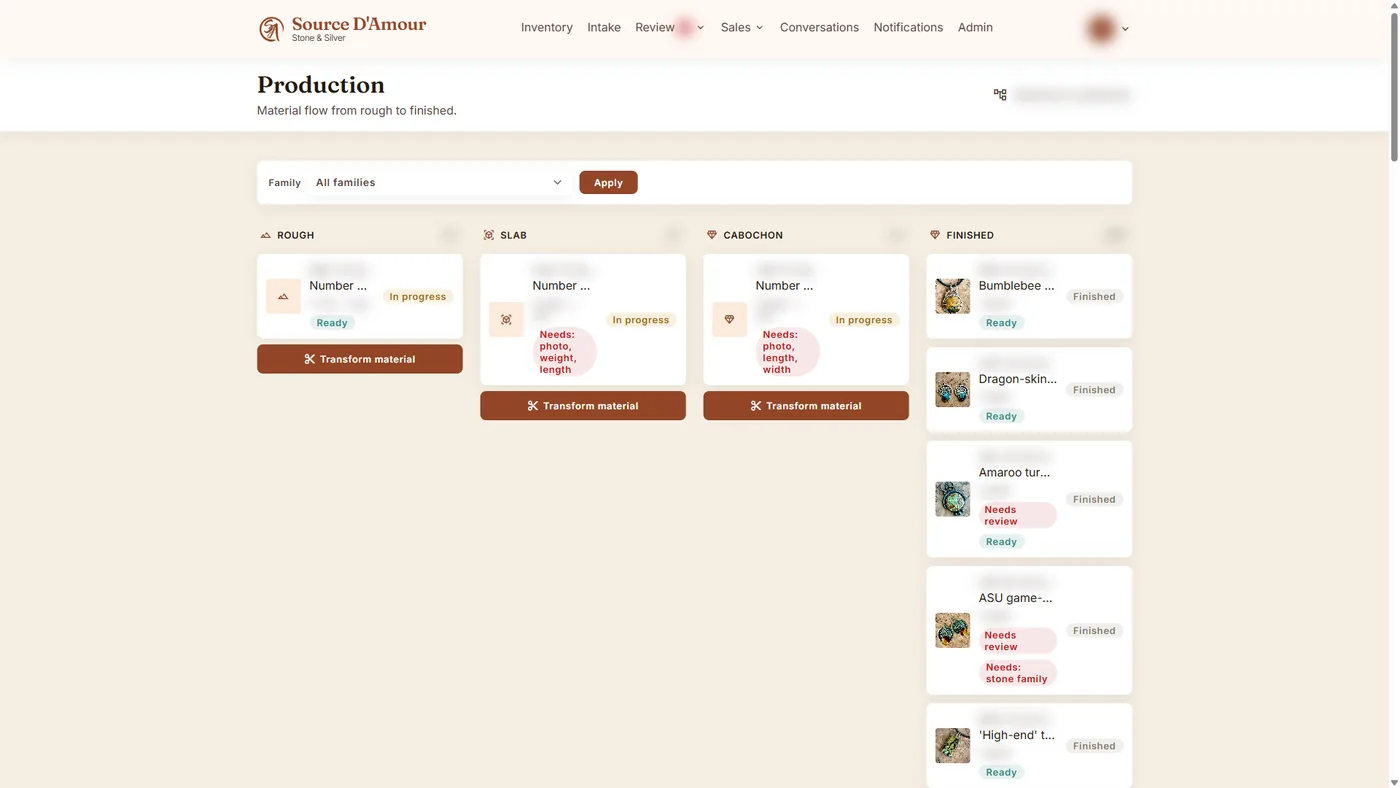
- Production lineage from rough to slab to cabochon to finished
- Memo and consignment ledger
- QR label printing through a remote print agent
Intake and catalog
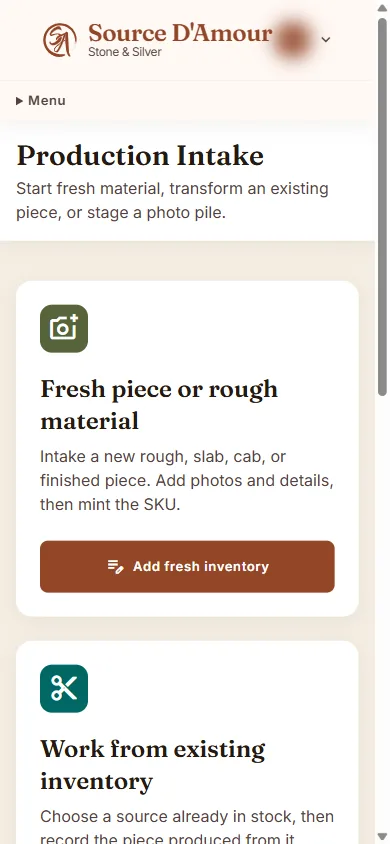
- Custom mobile intake system (fresh material, existing stock, or a photo pile)
- AI-drafted listing copy with human approval
- Product pages deployed automatically on approval
- Dynamic catalog and line-sheet generation with real inventory holds
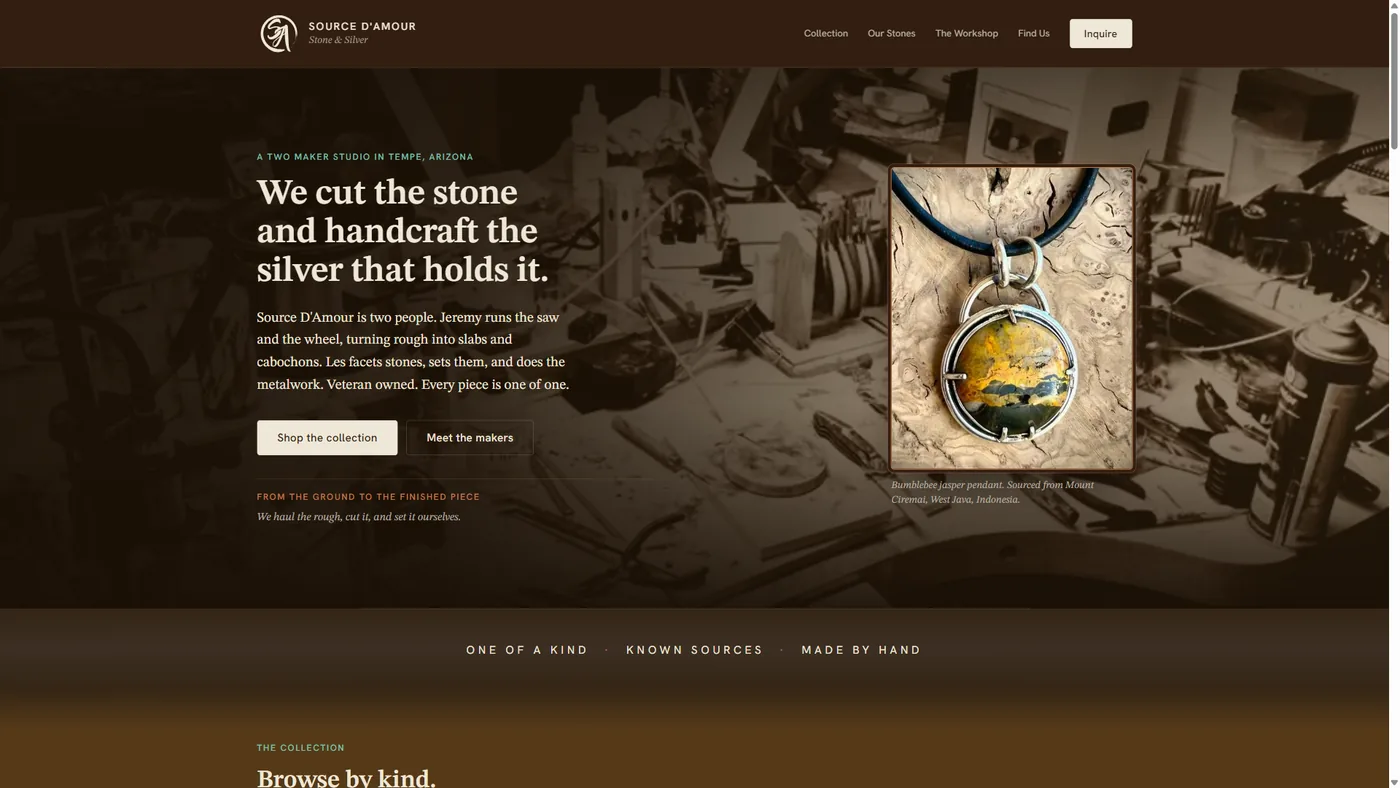
- Public storefront and buyer catalog
Customers and sales
- Customer and buyer tracking with preference profiles
- Inquiry and opportunity tracking with automatic matching
- Booth checkout for selling at shows
- Invoice generation
- QuickBooks API integration
- Sales dashboard: revenue, margin, channels, 12-month trend
Communication and operations
- Conversation hub connected to the whole team's email
- Per-user notification rules
- Newsletter and transactional email
- User management with role-based access
- Nightly backups and a five-minute automation rail
- Wholesale buyer discovery engine
On the roadmap
- Stone-and-mold pairing configurator (staff lab live, buyer view next)
- Buyer-facing product configurator
- Multi-brand storefront
Why owning it matters
No rent, no ransom.
Plain code and a plain database on a server the studio prepaid for two years. Nothing to cancel, nothing that can be raised on renewal.
Bends to the business.
New workflow? New field? New rule? It gets built, not requested from a vendor's roadmap.
An asset that compounds.
Every improvement stays. The platform gets more valuable every month instead of sending money out the door.
Why the operator built it
The thesis behind every project in this catalog.
They already know what the business needs.
A team member does not need a discovery phase. They know the workflows, the exceptions, and what actually matters. With AI they can carry a build most of the way before bringing in a consultant, or a community, for review and cleanup.
Talking to AI beats briefing a dev team.
Relaying features to an outside team is slow and lossy. Describing them to an AI is the same work, except the result comes back in minutes, gets corrected on the spot, and runs end to end.
The only real cost is time, and there is far less of it.
Eight weeks and 34 active build days, alongside other projects, produced what a hired team would quote at six figures and schedule in quarters.
That is what the Vista AI Cohort teaches: operators building their own software, with a community for the parts that need a second set of eyes.
See it
 Next project · BuiltRFP and RFQ Bid EngineA signage contractor went from three or four bids a month to fifty-seven verified submissions worth $3.3M, with every number traceable to the page it came from.
Build your own advantage.
Get a personal AI trainer and a community for the parts that need a second set of eyes.